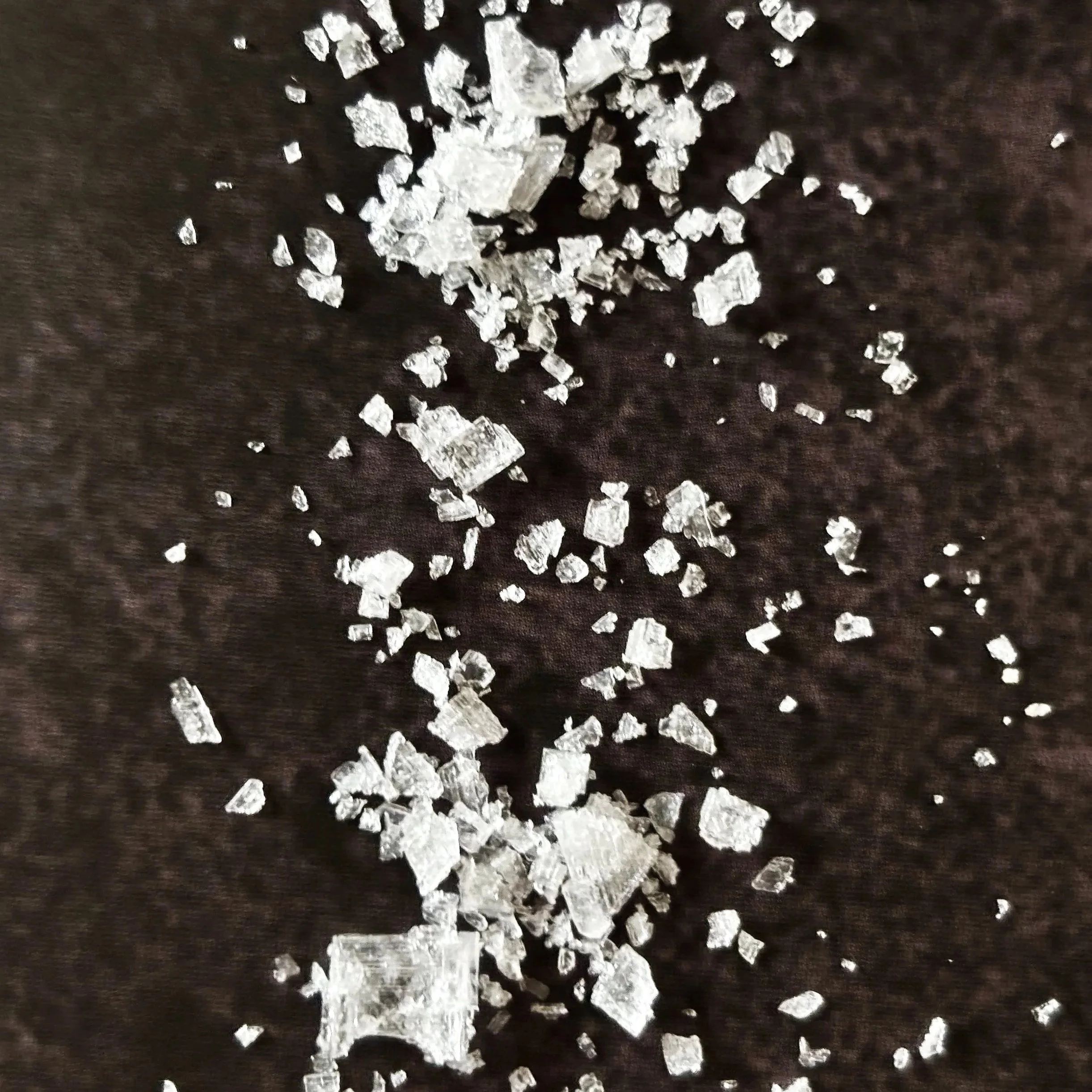
Maldon Salt— Flaky, crunchy, and a little bit magical.
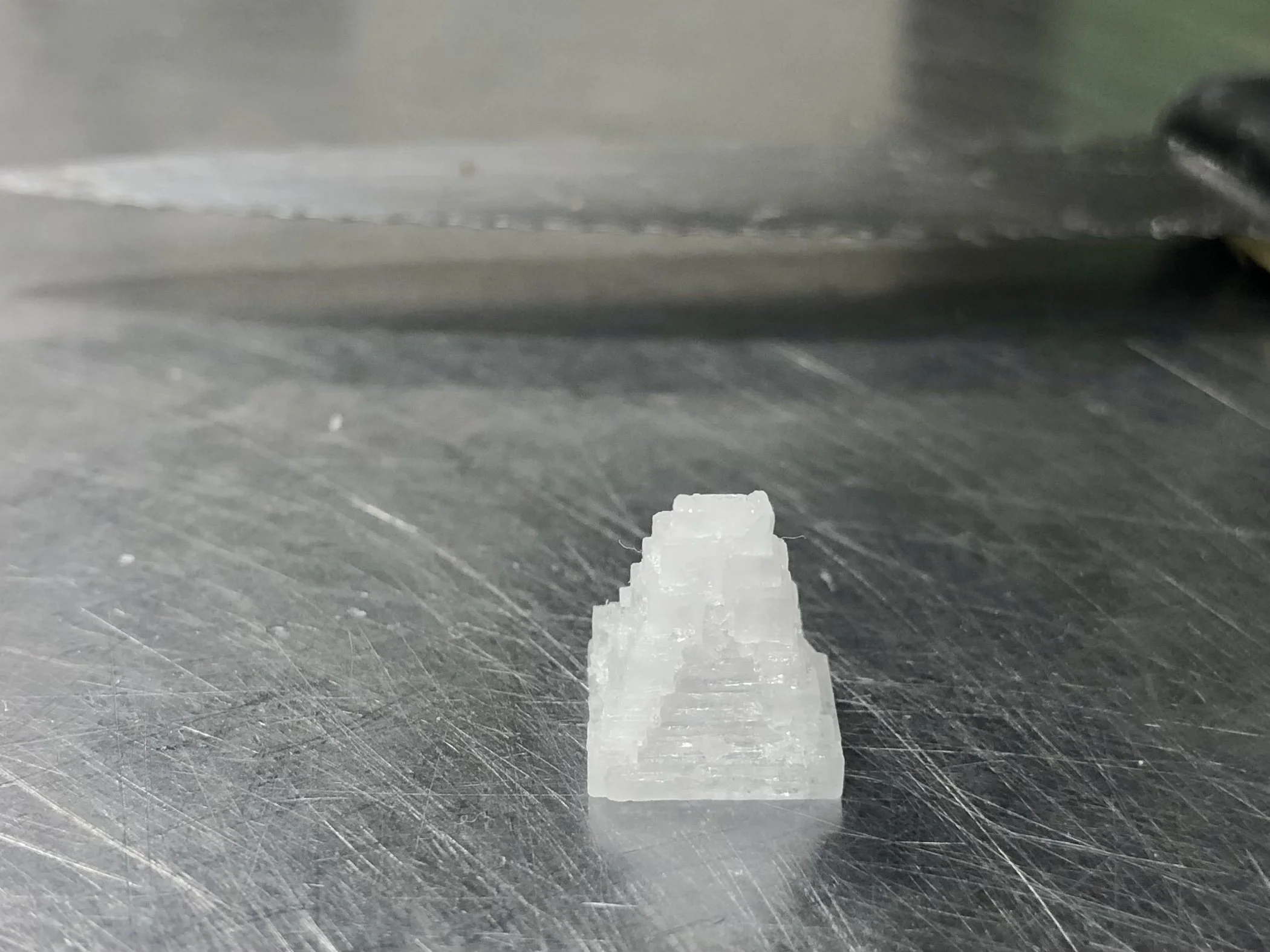
Yes, she’s real. Found in the wild (kitchen).
I was the kind of kid who drank pickle juice straight from the jar.
Not because I was hungry, not because I was dared. But because I craved the cold brine, the vinegar, the salt hitting the back of my throat like a small, sharp revelation. I didn’t have a word for what I was chasing then. I just knew I was onto something.
Salt is the oldest preservative, the first seasoning. It made food last through winter. It shaped trade routes and economies, preserved the dead, consecrated the sacred. Wages were paid in it — the word salary is said to derive from the Latin salarium, the salt ration given to Roman soldiers. Across cultures and centuries, it was life and death.
In a kitchen, salt does several things at once. It suppresses bitterness, which is why it belongs on chocolate. It amplifies flavor, which is why everything tastes more like itself when seasoned correctly. It controls fermentation in bread dough, tightening the gluten structure and regulating the pace of the yeast. It draws out moisture, builds brines, forms crusts. It is the most fundamental tool in the kitchen — not a stand-alone seasoning so much as a conductor, organizing everything else around it.
I learned this slowly, the way you learn things you already know in your body but haven’t yet found words for. The first time I finished a loaf of focaccia with Maldon and watched the crystals catch the light like scattered diamonds, something clicked. This wasn’t just salt. This was salt as intention, salt as craft, salt as the last decision that made everything before it significant.
The chocolate chip cookie came next. A pinch of finishing salt on top before it went into the oven, and suddenly the chocolate tasted more like chocolate, the butter more like butter. Salt doesn’t add flavor — it reveals it. It makes you taste what’s actually there.
Not all salt is the same. Here is what I keep on my shelf and why.
Fine sea salt is my pastry salt — consistent, fine-grained, it dissolves evenly into doughs without disrupting texture. When precision matters, this is what I reach for.
Sel gris is the workhorse. Harvested from the Atlantic coast of France, grey from the clay of the salt ponds, mineral and complex. I use it in bread dough where it adds genuine depth, in brines, in pasta water, over vegetables before roasting. It’s the salt that does the heavy lifting without announcing itself.
Fleur de sel is sel gris’s more delicate cousin — skimmed from the surface of the same salt ponds, finer, more subtle. Where Maldon announces itself, fleur de sel whispers. I reach for it when I want complexity without drama, when the dish is already saying enough and just needs a quiet finish.
Maldon is the diamond salt. The hollow pyramid crystals shatter differently than any other salt — there’s a crunch that’s entirely its own, a clean burst of salinity that hits and dissolves and leaves you wanting more. Use it on chocolate mousse. Use it on ice cream. Use it on grilled peaches and burrata. Use it on anything that deserves to be noticed.
In every professional kitchen I’ve worked in, there’s been a box of Diamond Crystal kosher salt. At home, I’ve never bought it. The salts on my shelf ask more of me, and give more back.
I made a salted butter caramel recently. Butter and sugar cooked until the color of an old penny, finished with fleur de sel. The kind of thing that makes you close your eyes when you taste it.
Salt and sugar are the oldest tension in cooking. They need each other. Too much of either and the whole thing falls apart — but balanced, they do something that neither can do alone.
The kid with the jar of pickle juice knew something. Salt enlivens, it balances — it makes vinegar drinkable. And the power of salt doesn’t stop there.
